Letterboxd
- 3.3
- Rating
- 10.00M
- Installs
- Free
- Price

 Analysis by App-foxy
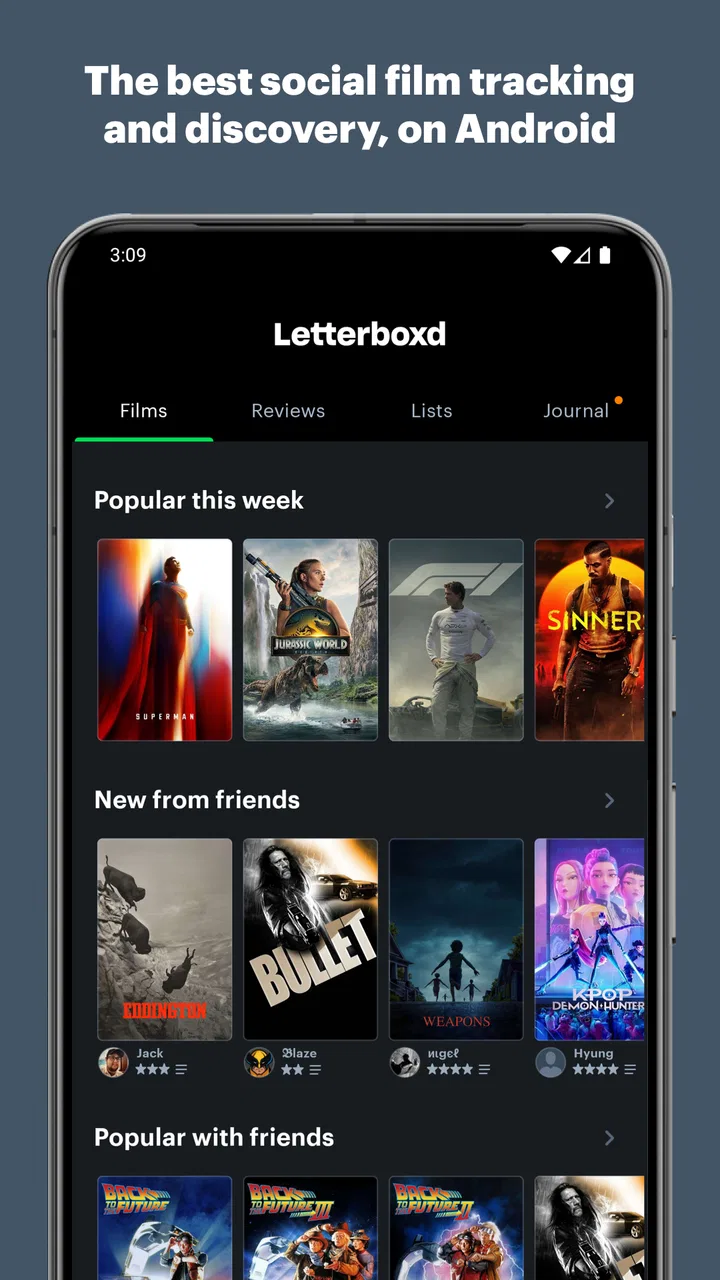
I use Letterboxd as a social film journal rather than treating it like another streaming service. That distinction matters. It helps me remember what I watched, decide what to see next, and compare my taste with other film fans, but it does not replace a platform that actually plays movies. If you want a focused place for logging films and talking about them, this app is easy to understand. If you mainly want instant viewing, private notes, or a simple list with no social layer, the decision is less obvious.
Letterboxd is a free social app for film lovers from Letterboxd Limited. It is rated for Teen users, runs on operating systems from version 9 onward, and has grown to more than ten million installs. The current version is 3.5.2. Its average rating sits at 3.1 from roughly thirty-two thousand ratings, which tells me that the idea is popular but the mobile experience will not satisfy everyone equally. Optional in-app purchases range from $0.99 to $48.99 per item, so it is worth deciding how much of the service you actually need before paying for extras.
How I Decide Whether Letterboxd Fits
My first question is not “Do I like movies?” Almost everyone downloading this app does. The better question is “What do I want to do after watching one?” If the answer is record it, rate it, write a short reaction, place it on a watchlist, or see how other people responded, Letterboxd has a clear purpose. If the answer is only find a title and press play, a streaming app or a general entertainment guide will usually be more direct.
You May Also Like

 Blood Strike: 2.5 Anniversary
Blood Strike’s Loadouts Turn Every Drop Into a Tactical Gamble
A close look at Blood Strike’s custom loadouts: how fast access to signature weapons reshapes its battle royale rhythm, rewards preparation, and narrows the gap between fights.

 Pandora - Music & Podcasts
Pandora’s Music Is Easy to Start, but Harder to Recover
Pandora’s strength is its low-effort path from a seed to a station. Its weak spot is how much confidence it asks you to place in connection, setup, and quiet recovery.

 8 Ball Pool
 Is Built on Rivalries, Rematches, and Routine
A close look at the rivalries, rematches, shared routines, and unanswered safety questions that turn a quick pool match into a persistent mobile community.

 Samsung Music
’s Quiet Strength Is Playing What You Already Own
Its reach comes less from spectacle than from dependable access to a personal library. That simplicity is both the app’s strongest retention engine and its ceiling.

 AccuWeather: Weather Radar
AccuWeather Review: A Quick, Clear Forecast for Everyday Decisions
For everyday plans, the best forecast is the one you can understand quickly. AccuWeather makes rain timing, radar, and local conditions easy to act on, with a few trade-offs.

 Hill Climb Racing
Why Hill Climb Racing Still Turns Crashes Into One More Run
A tiny car, a bumpy hill and one more upgrade: Hill Climb Racing keeps resurfacing because its simple chaos makes every near-miss feel personal.
More From Our News Desk
View All News


I also consider whether I want my film history to be social. The app is built around discovery and conversation, so its value increases when I enjoy reading other people’s opinions and following recurring tastes. Someone who prefers a completely private diary may find the community emphasis unnecessary. The service can still be useful for personal organization, but its personality comes from the interaction between individual film logs and the wider film community.
A second decision point is how seriously I take film organization. For casual viewers, a watchlist is probably enough. For people who watch across genres, decades, countries, and directors, the ability to maintain a long-running record becomes much more valuable. I like having one place to revisit my past choices instead of relying on memory or scattered notes. That history can also expose habits: I may discover that I keep postponing certain genres or repeatedly choose films recommended by the same small group of users.
The final criterion is patience. Letterboxd rewards browsing and gradual curation more than instant answers. I may open it intending to choose one film and end up reading several reviews, checking lists, and saving possibilities for later. That is enjoyable when I am in the mood for film exploration. It is less efficient when I am already sitting with friends and need a quick answer before the evening disappears.
What the everyday workflow feels like
A realistic use case is a Friday night after watching a film with friends. I can mark the title as watched, give it a rating, and add a few lines while the reaction is still fresh. If the group mentions another movie during the conversation, I can save that title to the watchlist instead of trusting myself to remember it. Later, I can return to the record and see not only what I watched, but why I felt the way I did at the time.
That small habit is more useful than it sounds. Short reactions written immediately are often more honest than a carefully prepared review days later. I do not need to write an essay every time. A sentence about the pacing, one memorable performance, or the mood the film created is enough to make the entry meaningful when I revisit it months later.
For a more organized routine, I would separate three actions that are easy to confuse: logging a film I have already watched, rating it, and adding an unwatched title to the watchlist. Keeping those actions distinct prevents the watchlist from becoming a vague collection of films I may never see. I also find it helpful to review the list occasionally and remove titles that no longer interest me. A smaller, intentional list is much easier to use than an endless storage bin.
Where the app is strongest
Letterboxd’s biggest strength is that it combines a personal film record with a community that is specifically interested in cinema. Many general social networks discuss movies, but film conversation there is mixed with everything else. Here, the subject stays focused. When I open the app, I am more likely to encounter a review, a recommendation, or a themed list than unrelated updates.
The social layer is particularly useful when I follow people whose taste is different from mine but still understandable. A friend who loves slow dramas may lead me toward films I would never choose from a standard popularity ranking. Another user may explain why a highly praised film did not work for them, giving me a more balanced view than a single score. I do not treat any rating as an instruction; I use it as a starting point for a conversation.
The personal archive is another genuine advantage. A streaming service may show watch history, but that history is usually tied to one company and is not designed as a thoughtful film diary. Letterboxd makes the act of recording a film feel deliberate. Over time, the log becomes a map of my viewing life, including films I loved, films I disliked, and films I watched for reasons that have nothing to do with their reputation.
The watchlist also works better when I treat it as a decision tool rather than a permanent shelf. I can add a film after hearing about it, then use later browsing to decide whether it still deserves attention. This is more practical than trying to remember every recommendation from conversations, articles, or social posts. The important trade-off is that the app helps me collect possibilities, but I still need another service or source to determine where a particular film is available to watch.
Another strength is the tone of film discussion. The app supports both quick reactions and longer writing, so I can participate at my own level. I do not have to become a critic to benefit from it. A brief note can be useful to me, while a thoughtful review from another user can offer context I would not get from a bare score. That range makes the service approachable for newcomers and rewarding for people who enjoy deeper analysis.
Three habits that make it more useful
My first practical tip is to write a private-feeling note even when I am posting socially. I focus on what I noticed rather than trying to sound authoritative. “The second half lost me” is more useful for future decisions than a vague statement that a film was good or bad. This approach turns the log into a memory aid instead of a performance.
Second, I use other people’s profiles as taste samples, not as recommendation machines. If someone consistently enjoys films that match my mood, I pay attention to their lists and reviews. If their choices are very different, I may still read them for perspective, but I avoid filling my watchlist with every title they mention. This reduces the common problem of collecting more films than I can realistically watch.
Third, I compare my own rating with my written reaction after some time has passed. Sometimes I discover that I rated a film generously because I was excited, or harshly because I expected something else. That comparison helps me understand my taste more honestly. It is a subtle benefit of maintaining a long-term journal, and it is easy to miss if I only use the app to browse current activity.
I also recommend being selective about social notifications and activity. A lively feed can become distracting, especially when every new review encourages another detour. I get more from the app when I decide whether I am opening it to log, browse, or read. Giving each visit a purpose keeps the experience from turning into endless scrolling.
Where another type of app may be better
Letterboxd is not the best choice for every film-related task. If my main goal is discovering what is available on the streaming services I already pay for, a streaming search tool is usually more practical. Those services can take me from a title to playback without asking me to maintain a separate film diary. Letterboxd can help me decide what interests me, but availability and playback are a different problem.
A general movie database may also suit someone who wants reference information first. If I need a quick cast check, a release detail, or a broad title search, a database designed around factual lookup may feel faster. Letterboxd’s appeal is less about being a neutral encyclopedia and more about combining records, opinions, lists, and personal taste.
For people who only want a private checklist, a notes app or spreadsheet can be simpler. That route avoids public interaction and gives complete control over organization. The trade-off is that I lose the ready-made film community and the pleasure of discovering titles through other viewers. I would choose a private tool when confidentiality and minimalism matter more than conversation.
There is also a difference between Letterboxd and short-form social media. A general social network may be better for sharing a quick joke or reaching friends who do not use a dedicated film app. Letterboxd is better when I want my movie activity to remain organized and searchable within a film-centered environment. The right choice depends on whether the conversation itself or the lasting record matters more.
Friction, limitations, and the cost of changing habits
The average rating of 3.1 suggests that the app’s concept does not automatically translate into a smooth experience for every user. My main concern with a service like this is not the idea of logging films; it is the effort required to keep the habit useful. If I forget to record what I watch, the archive becomes incomplete. If I add everything to the watchlist, the list becomes difficult to trust. The app rewards consistency, and that can feel like work.
The social feed can also influence my choices too strongly. Popular opinions are not necessarily the right opinions for my mood, and highly visible reviews may make a film seem more important than it is to me. I try to read several perspectives and then make my own decision. Users who dislike public ratings, strong community trends, or frequent comparison may find the social design tiring rather than motivating.
There is a practical switching cost as well. Moving from a basic note-taking habit to a dedicated film diary means remembering one more step after every viewing. Moving away later can be inconvenient because the value accumulates in the history, ratings, lists, and writing I have built. I would not call that a reason to avoid the app, but I would start with a manageable routine instead of trying to document my entire viewing life in one weekend.
The free entry point makes experimentation easy, but optional purchases deserve a deliberate approach. I would use the free experience first and decide whether the additional tools genuinely change how I organize or discover films. Paying simply because I enjoy the community is reasonable, but paying without knowing which part of my workflow needs improvement is less sensible. The listed purchase range, from $0.99 to $48.99 per item, is broad enough that I would check the exact benefit before committing.
Parents should also remember that the app carries a Teen content rating. That does not automatically make it unsuitable for every younger viewer, but film discussions and the films being discussed can cover mature subjects. I would treat the age guidance as a prompt to consider the individual user, especially if the app is being introduced as a family activity.
Who should install it, and who should skip it
I recommend Letterboxd to someone who watches films regularly and wants a lasting record of that experience. It is especially appealing if you enjoy comparing reactions, finding recommendations outside the mainstream, or writing even very short notes. Film students, dedicated movie fans, and curious viewers who want to develop their taste can all get more from it than they would from a simple watch history.
I would also suggest it to a group of friends who often recommend films to one another. A shared habit of logging and discussing titles can make those recommendations easier to remember. The app becomes a kind of ongoing conversation rather than a series of messages that disappear in a busy chat.
I would skip it if I want a completely private, distraction-free record or if I expect the app to tell me exactly what I can watch right now. I would also hesitate if I rarely watch films, because the social archive may not build enough value to justify another account and another routine. In those cases, a notes app, a streaming service, or a general movie reference tool may be the better fit.
My recommendation after using it
Letterboxd is best understood as a film diary with a community attached, not as a movie player. That single distinction explains both its appeal and its limitations. I like it because it gives my viewing habits structure while still leaving room for personality, disagreement, and discovery. The app feels most rewarding when I use it intentionally: log what I watched, write a sincere reaction, save only promising titles, and treat other people’s opinions as clues rather than commands.
The app is free to start, comes from Letterboxd Limited, and has the reach of a well-established social film service, with more than ten million installs. Still, its modest 3.1 average rating is a useful reminder to keep expectations realistic. The concept is strong, but individual satisfaction depends on how much I enjoy the social feed and how willing I am to maintain my film history.
My final advice is to try it with a small experiment. Log the next few films you watch, add a short personal note, and build a watchlist only from recommendations you would genuinely consider. After that, ask whether the archive helped you choose better films or remember them more clearly. If it did, the app earns a place in your regular movie routine. If it only added another feed to scroll, a simpler alternative will probably serve you better.
FAQs for Letterboxd
01What is Letterboxd and what does it offer?
Letterboxd is a social networking app focused on film lovers, allowing users to track movies they’ve watched, create watchlists, and write reviews. It offers a platform to engage with a community of cinephiles, discover new films, and share personal insights. The app enhances the cinematic experience through community interaction and personal reflection.
02Is Letterboxd free to use, or are there any subscription options?
Letterboxd is free to download and use, offering basic features such as movie tracking, reviewing, and social networking. However, it also offers Pro and Patron subscription tiers. These provide additional features like personalized statistics, advanced search options, and no advertisements, catering to more dedicated users.
03How user-friendly is the Letterboxd interface for new users?
Letterboxd boasts an intuitive and user-friendly design, making it accessible to new users. The interface is clean and easy to navigate, with straightforward options for logging films, writing reviews, and exploring community content. New users typically find the onboarding process smooth, with helpful guides and prompts.
04Can I connect with friends or follow other users on Letterboxd?
Yes, Letterboxd allows you to connect with friends and follow other users, enhancing the social experience. You can see what movies your friends are watching, read their reviews, and interact through comments. This interaction fosters a lively community where users can exchange recommendations and opinions.
05What privacy options does Letterboxd provide for user content?
Letterboxd offers various privacy settings to control who can view your profile and activity. Users can choose to make their profiles public or private and manage followers and friends. These options allow users to maintain a desired level of privacy while engaging with the community, making it a versatile platform.
Pros
- Extensive film database for diverse tastes.
- User-friendly interface with intuitive navigation.
- Personalized film recommendations enhance discovery.
- Community features foster engaging discussions.
- Regular updates keep content fresh and relevant.
Cons
- Requires internet connection for full functionality.
- Limited offline features for film tracking.
- Some features behind a premium paywall.
- Occasional app crashes on older devices.
- In-app ads can be slightly intrusive.

Letterboxd
Gallery